- What is the Ideal Resume Length for Different Experience Levels?
- One-Page Resume: Is it Right for You?
- Best For
- Why It Works
- How to Make a One-Page Resume Better
- Two-Page Resume: When Does It Make Sense?
- Best For
- Why It Works
- How to Make a Two-Page Resume Better
- Three-Page Resume: Who Needs It?
- Best For
- Why It Works
- How to Make a Three-Page Resume Better
- Factors that Influence Resume Length
- Industry Expectations
- Other Things to Consider
- Applicant Tracking Systems (ATS) Considerations
- Key Points to Remember
- Career Stage & Work Experience
- Mid-Career Professionals: Use Two Pages Strategically
- Executives & Specialists: Three Pages Only When Necessary
- Resume Formatting: Best Practices for Different Lengths
- One-Page Resume
- Two-Page Resume
- Three-Page Resume
- How to Shorten a Resume Without Losing Value
- 1. Remove Unnecessary Words and Outdated Skills
- 2. Focus on Accomplishments
- 3. Adjust Font Size, Spacing, and Margins
- How to Strengthen Your Resume Without Unnecessary Content
- 1. Include Achievements with Numbers
- 2. Add Keywords from Job Posting
- 3. Organize Skills Under Headings
- Example
- Technical Skills:
- Soft Skills:
- Conclusion: How Long Should a Resume Be?
Hiring managers look at resumes quickly, often spending less than 10 seconds.
This means that your resume needs to be clear and to the point. The length of your resume should depend on your experience, the type of job, and the industry.
Key Takeaway
- One Page: This is best for students or people who are just starting their careers. It should include your education, any internships, or entry-level jobs.
- Two Pages: This length works well for people with about 10 years of experience. It gives you enough space to show your career progress, important skills, and big achievements.
- Three Pages or More: This is used mostly for executives, professors, or people in government jobs. They often need more space to talk about their long careers, research, or special projects.
Suggested Read: What is a Resume? Understanding Its Purpose and Importance
What is the Ideal Resume Length for Different Experience Levels?
The ideal resume length varies based on experience.
Entry-level candidates (0-2 years) should keep it to one page, focusing on education, internships, and skills. Mid-level professionals (3-7 years) can extend to two pages, highlighting work experience and achievements, while senior-level (8+ years) candidates may also use two pages to showcase leadership and industry contributions.
Executives (15+ years) may need up to three pages to detail strategic roles and major accomplishments, but all resumes should remain clear, concise, and job-focused.
One-Page Resume: Is it Right for You?
A one-page resume is a great choice for students, recent graduates, or people with little work experience. It should include important details like education, skills, internships, projects, and jobs related to the position.
Best For
- Students and Recent Graduates: If you are a student or have just graduated, you can use a one-page resume to show your education and any internships or volunteer work you have done.
- Career Changers: If you are switching to a new job or field, a one-page resume will help you highlight your important skills.
- Job Seekers in Creative and Tech Fields: If you are looking for a job in fields like design or technology, a one-page resume helps to show your skills quickly.
Why It Works
- Quick to Read: Hiring managers look at resumes very quickly, so a one-page resume helps them find the important information fast.
- Keep It Simple: A one-page resume makes it easy to focus on your best skills and most important experiences.
- Preferred by Many Companies: Companies in creative or tech fields like to see short, clear resumes that they can review quickly.
How to Make a One-Page Resume Better
- Show Recent Experience: Focus on your most recent and relevant jobs or experiences. Do not list jobs from many years ago if they are not important.
- Use Bullet Points: List your skills and accomplishments in short bullet points. Make sure to show how you helped in your past jobs.
- Use Smart Layouts: Organize your resume well by using columns and spacing. This helps you fit more important information on one page.
Two-Page Resume: When Does It Make Sense?
A two-page resume is a good choice if you have a lot of work experience. It allows you to show all your important skills and accomplishments clearly.
Best For
- Mid-Level Professionals with 10+ Years of Experience: If you have been working for many years, you can use a two-page resume to show how you have grown in your career.
- Career Changers: If you are moving to a new job or field, a two-page resume gives you enough space to show your old skills and how they match the new job.
- Jobs That Need Detailed Skills Section: Jobs in areas like IT, engineering, or healthcare need a list of special skills. A two-page resume helps you show this clearly.
Why It Works
- Shows Career Progression: A two-page resume lets you explain how your career has developed. You can show the jobs you have had and how you grew in your role.
- Space for Achievements: You can use the second page to talk about projects you worked on or important things you accomplished.
- Common in Certain Fields: People working in corporate jobs, healthcare, or STEM fields often have more experience. These jobs usually need a longer resume to show all their skills.
How to Make a Two-Page Resume Better
- Put Important Information on the First Page: Make sure your best achievements and skills are on the first page so the reader sees them quickly.
- Leave Out Old or Unimportant Jobs: If a job is not important to the role you want, you don’t need to list it. Focus on the jobs that matter most.
- Use a Strong Summary at the Start: Write a short summary at the beginning of your resume to show who you are and what you have done in your career.
Three-Page Resume: Who Needs It?
A three-page resume is best for people who have a lot of experience, such as top leaders, professors, researchers, or technical experts. It gives you enough space to show all the important details about your career.
Best For
- Senior Executives & Leaders: If you are a leader in a big company or organization, a three-page resume helps you explain the important projects you managed and how you made a big impact.
- Academics, Researchers, & Government Jobs: People in these fields often need a longer resume to list things like their research, publications, or the projects they worked on.
- Technical Professionals: If you work in fields like engineering, law, medicine, or data science, you may need a three-page resume to explain the big projects you’ve done and the special skills you have.
Why It Works
- Good for High-Level Jobs: If you have held big leadership roles, you need a longer resume to explain your work and the big decisions you made.
- Used in Research and Government Roles: In these areas, people often need to list many details about their work, such as papers they wrote or grants they received.
- Common in Scientific and Technical Jobs: These jobs often require detailed descriptions of special projects or research, which can take up more space.
How to Make a Three-Page Resume Better
- Organize the Sections: Make your resume easy to read by using clear sections, such as Work Experience, Publications, and Projects.
- Focus on the Important Details: Only include the information that is most important to the job you want. Leave out things that are not needed.
- Start with a Strong Summary: Write a short paragraph at the beginning that explains who you are and what you have done in your career.
Suggested Read: How to Make a Resume: Step-by-Step Writing Guide for 2025
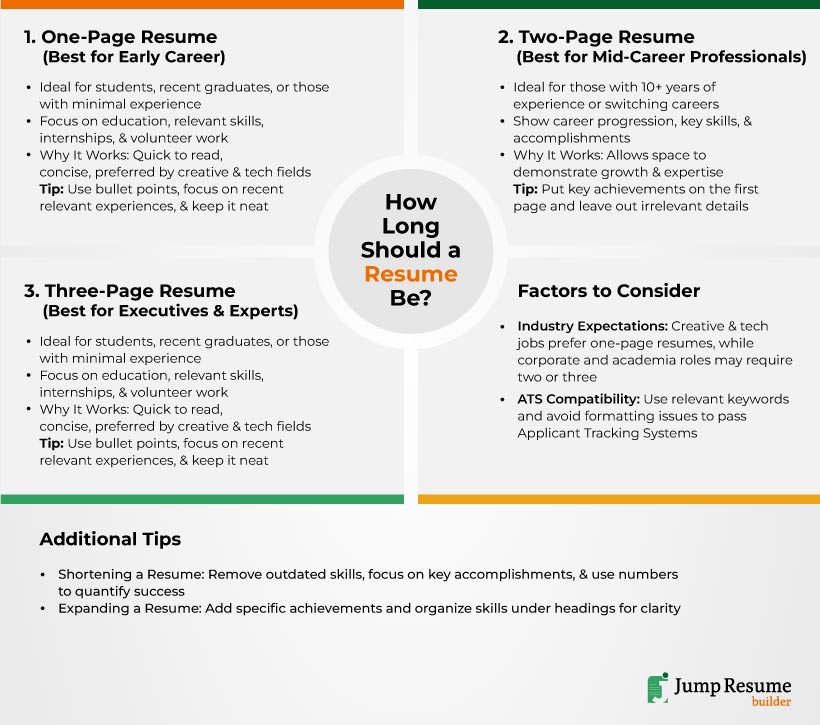
Factors that Influence Resume Length
The length of your resume can depend on different things, such as the type of job you are applying for and the industry you are in. It’s important to know what different industries expect when it comes to resume length.
Industry Expectations
- Creative & Tech Roles: People who work in creative jobs like design or tech often need a short resume. A one-page resume is usually enough. You can also add a link to your portfolio, which shows your work.
- Corporate & Finance: Jobs in business or finance may need a two-page resume. If you are applying for a senior position, a two-page resume lets you show your experience and skills clearly.
- Government & Academia: Jobs in government or academic fields often require longer resumes. These jobs may need three pages or more because you may need to show lots of information, like publications or special projects.
Other Things to Consider
- Experience Level: If you are just starting your career, a one-page resume is usually enough. But if you have many years of experience, a two-page resume is better to show your work clearly.
- Job Type: The type of job you want also affects the length of your resume. If you are applying for a technical job, you might need more space to explain your skills or projects.
By understanding what industries expect, you can decide how long your resume should be. Make sure it shows all your important skills and experiences in the right way for the job you want.
Applicant Tracking Systems (ATS) Considerations
Applicant Tracking Systems (ATS) are tools that many companies use to help organize resumes. While ATS can handle longer resumes, it is important to keep your content clear and focused.
Key Points to Remember
- Concise Content: It is important to keep your resume simple and to the point. This helps both the ATS and the people reading your resume find important information quickly.
- Avoid Formatting Errors: When writing your resume, use clear fonts and simple layouts. Don’t put important text in headers or footers, because the ATS might not be able to read it.
- Don’t Overuse Keywords: While it is good to use important words related to the job, don’t use them too many times. If you do, the ATS might not rank your resume as well.
Career Stage & Work Experience
The length of your resume depends on how much work experience you have. The more experience you have, the longer your resume can be. However, it’s important to keep it clear and simple.
Mid-Career Professionals: Use Two Pages Strategically
If you have worked for 5 to 10 years, you might need two pages for your resume. This gives you space to show how your career has grown and the important skills you have learned. Be sure to include only the most relevant experiences that match the job you are applying for.
Executives & Specialists: Three Pages Only When Necessary
If you are a senior executive or specialist with lots of experience, you might need three pages for your resume. This allows you to show all your leadership roles and achievements. However, only include the most important details that help show you are the right fit for the job.
Resume Formatting: Best Practices for Different Lengths
A well-organized resume helps employers find important details quickly. The right length depends on your experience and the type of job you want. Below are some best practices to follow based on resume length.
One-Page Resume
- Best for: Students, recent graduates, or people with less than 10 years of experience.
- Focus on: Education, skills, and recent job experience.
- Formatting Tips:
- Use bullet points to keep it easy to read.
- Choose a simple font, like Arial or Calibri, in size 11 or 12.
- Keep margins about 1 inch to make it look neat.
Two-Page Resume
- Best for: Professionals with over 10 years of experience.
- Focus on: Work history, accomplishments, and important skills.
- Formatting Tips:
- Put your most important details on the first page.
- Use headings like “Work Experience” and “Education” to organize content.
- Keep sentences short and clear.
Three-Page Resume
- Best for: Senior executives, professors, or people with many projects or research work.
- Focus on: Work history, leadership roles, and major achievements.
- Formatting Tips:
- Start with a strong summary to highlight key skills.
- Use a special section for publications or research if needed.
- Keep the format the same on every page.
How to Shorten a Resume Without Losing Value
If your resume is too long, follow these tips to make it shorter while keeping important details.
1. Remove Unnecessary Words and Outdated Skills
- Make sentences shorter. Instead of saying “Was responsible for leading a team of five people,” say “Led a team of five.”
- Update skills. Remove old or unneeded skills and focus on what matters for the job.
2. Focus on Accomplishments
- Use numbers to show results. For example, instead of saying “Helped increase sales,” say “Increased sales by 20%.”
- List only relevant experience. Leave out jobs or details that do not relate to the job you are applying for.
3. Adjust Font Size, Spacing, and Margins
- Use a readable font size (11-12 points). Do not make it too small.
- Use spacing wisely. Make sure the text is easy to read but not too spread out.
- Use columns for lists. This helps save space and keeps your resume neat.
How to Strengthen Your Resume Without Unnecessary Content
Expanding a resume without adding extra words is important to keep it clear and strong.
First, focus on your achievements instead of just listing job duties. For example, say, “Helped increase sales by 20%” instead of simply “Worked in sales.” Next, add volunteer work if it relates to the job because it shows helpful skills and experience.
Also, include a skills section to list important abilities like computer programs or languages you know.
Studies on the Effects of Applicant Personality on Resume Evaluations show that personality traits like being responsible and working well with others can help in getting hired. So, make sure your resume shows qualities like teamwork, leadership, and problem-solving.
If you are a student, you can expand your education section by adding important courses or projects.
Another way is to write a short professional summary at the top to introduce your experience and strengths. Finally, include any extra training or certificates to show that you are always learning new skills. By using these tips, your resume will be clear, professional, and easy to read.
1. Include Achievements with Numbers
Employers like to see proof of your success. Adding numbers to your accomplishments helps show your impact.
For example:
- Instead of: “Helped increase sales.”
- Use: “Increased sales by 25% in six months by creating new marketing strategies.”
- Instead of: “Managed company budget.”
- Use: “Reduced costs by 15% by improving the company’s budget plan.”
Using numbers makes your experience stronger and more impressive.
2. Add Keywords from Job Posting
Many companies use a system called Applicant Tracking Systems (ATS) to scan resumes. To make sure your resume is seen, use important words from the job description.
- Read the job posting carefully.
- Find words related to skills, tools, and experience.
- Add these words naturally to your resume.
For example, if a job asks for “project management” and “team leadership,” make sure to include these words in your work experience section.
3. Organize Skills Under Headings
Grouping your skills under clear headings makes your resume easier to read.
Example
Technical Skills:
- Programming: Python, Java
- Software: Adobe Creative Suite, Microsoft Excel
Soft Skills:
- Leadership
- Communication
By organizing your skills, employers can quickly find the information they need.
Conclusion: How Long Should a Resume Be?
A well-structured resume helps you stand out to employers.
The length of your resume depends on your work experience. If you are just starting your career, a one-page resume is enough to show your education and skills. However, as explained in a research study titled ‘Impressions of the Resume: The Effects of Applicant Education, Experience, and Impression Management’, employers look at more than just length. In this study, professionals reviewed different resumes and shared their opinions.
The results showed that having the right education made employers see the person as more capable and likely to earn a higher salary. In addition, having job experience made employers think the person was more confident and prepared for the job. Using impression management, such as positive wording, helped people seem more friendly, confident, and hirable.
Therefore, if you have more experience, a two-page resume may be better. It gives you more space to show your skills, career growth, and achievements. For senior executives or specialists, a three-page resume may be needed to cover leadership roles and important projects.
To make your resume stand out, highlight your real accomplishments and use specific numbers to showcase your success.
Incorporating relevant keywords from the job description ensures your resume performs well with Applicant Tracking Systems (ATS). Organizing your skills under clear, distinct headings also improves readability. To simplify the process and create a polished resume faster, try using our free online reputable Resume Builder to create a customized resume. With our customized templates, you’ll have a resume that’s not only clear and professional but also perfectly aligned with the job you’re aiming for.
- What is the Ideal Resume Length for Different Experience Levels?
- One-Page Resume: Is it Right for You?
- Best For
- Why It Works
- How to Make a One-Page Resume Better
- Two-Page Resume: When Does It Make Sense?
- Best For
- Why It Works
- How to Make a Two-Page Resume Better
- Three-Page Resume: Who Needs It?
- Best For
- Why It Works
- How to Make a Three-Page Resume Better
- Factors that Influence Resume Length
- Industry Expectations
- Other Things to Consider
- Applicant Tracking Systems (ATS) Considerations
- Key Points to Remember
- Career Stage & Work Experience
- Mid-Career Professionals: Use Two Pages Strategically
- Executives & Specialists: Three Pages Only When Necessary
- Resume Formatting: Best Practices for Different Lengths
- One-Page Resume
- Two-Page Resume
- Three-Page Resume
- How to Shorten a Resume Without Losing Value
- 1. Remove Unnecessary Words and Outdated Skills
- 2. Focus on Accomplishments
- 3. Adjust Font Size, Spacing, and Margins
- How to Strengthen Your Resume Without Unnecessary Content
- 1. Include Achievements with Numbers
- 2. Add Keywords from Job Posting
- 3. Organize Skills Under Headings
- Example
- Technical Skills:
- Soft Skills:
- Conclusion: How Long Should a Resume Be?