- Should You Include References on Your Resume?
- What Is a List of References?
- How to Write a Resume Reference List
- 1. Determine How Many References to Include
- 2. Select Your Resume References
- 3. Decide How to Send Your Reference List
- 4. Ask Your Contacts to Be a Reference
- How to Format a Reference Page
- Resume Reference Page Example
- Professional Reference
- Work Reference
- Character Reference
- Choosing the Right Resume Reference Type
- Professional References
- Work References
- Character References
- Common Reference Page Mistakes to Avoid
- Choosing Someone Who Does Not Know Your Work
- Using Outdated Contact Details
- Adding Too Much Personal Information
- Listing a Weak Reference
- Sending the List Too Early
- Reference Page Template for Your Resume
- Final Tips for Your Reference List
- FAQs
- How Should You Format a Reference List?
- How Do You List Someone as a Reference?
- What Is the Best Way to Ask Someone to Be a Reference?
- Can You Use Someone as a Reference Without Asking?
- How Many References Should You Include on a Resume?
- Should You Put “References Available Upon Request” on a Resume?
- Why Are References Important for Job Applications?
Blog Summary: Knowing how to handle references can help job seekers present a professional and accurate application. Choosing the right contacts, asking for permission, and formatting their details correctly can make the hiring process easier. The right approach also helps avoid common reference mistakes and keeps application documents organised.
You may have a strong resume, but an employer may still ask for references before making a hiring decision. Knowing how to handle this step can help you avoid common mistakes. A professional resume template can also help you maintain a clean and consistent look across your application materials.
So, do references go on a resume? In most cases, they should not. Instead, prepare a separate page and provide it when the employer requests one. This guide explains who to choose, how to format the document, and when to send it.
Should You Include References on Your Resume?
In most cases, you should not include references directly on your resume. Employers typically request them later in the hiring process when they are ready to contact your chosen references. This is different from getting referred by an employee, where someone within the company recommends you for a position.
Keeping them separate also gives your resume more room for information that directly supports your application. You can use that space for your skills, work history, education, certifications, and achievements.
This is especially relevant as, according to Society for Human Resource Management (SHRM), 92% of employers conduct background checks as part of the hiring process. This makes accurate and credible candidate information an important part of hiring.
You also do not need to add “References available upon request” at the bottom of your resume. This line takes up space without giving the hiring team useful information.
However, always follow the employer’s instructions. If a job posting asks for references with your application, provide them as requested.
What Is a List of References?
A list of references is a separate document that provides contact information for people who can discuss your skills, work history, or character.
A typical reference document includes:
- Full Name
- Job Title
- Company or Organization
- Phone Number
- Email Address
- Professional Relationship
You can also add a brief explanation of how you know the person. This gives the hiring team helpful context before they make contact.
For example:
Marketing Manager, ABC Solutions
Phone: 555-123-4567
Email: maria.johnson@example.com
Relationship: Former Direct Manager
Keep every detail accurate and current. Before listing anyone, ask if they are comfortable serving as a reference.
How to Write a Resume Reference List
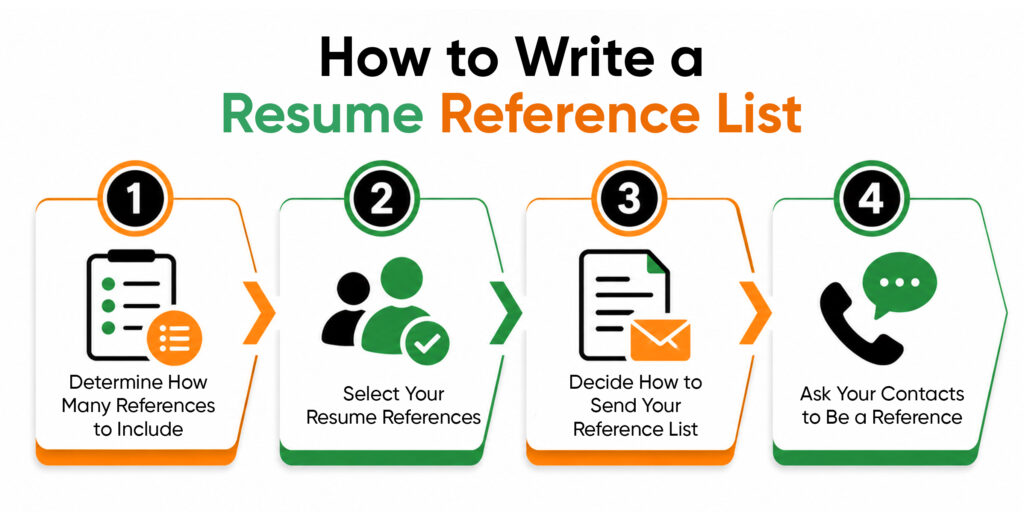
Creating this document does not have to be difficult. Follow these steps to build a clear and useful list.
1. Determine How Many References to Include
Start with the employer’s instructions. A company may request a specific number of references. If no number is provided, three references can be a practical starting point for many job seekers. You can provide more if the employer asks for additional people.
Try to include people who can offer different perspectives. For example, one person may discuss your leadership skills, while another can speak about your technical abilities.
Avoid listing several people who know you in the same professional capacity. A balanced list can give the employer a broader view of your experience.
2. Select Your Resume References
Choose people who know your work well and can provide specific examples of your strengths. Former managers, supervisors, senior colleagues, clients, professors, and professional mentors may be suitable options. Your choice should depend on your experience and the position you want.
For a recent graduate, a professor or internship supervisor may be a good choice. An experienced professional may prefer a former manager or senior colleague who can discuss their workplace performance.
Character references can also be useful in certain situations. They can speak about qualities such as reliability, responsibility, and integrity.
Avoid using close family members or friends unless the employer specifically asks for a personal reference.
3. Decide How to Send Your Reference List
Keep the document separate from your resume unless the employer requests a combined file. A PDF is often a practical format because it helps preserve your layout across different devices. You can also use a clear file name, such as Alex_Morgan_References.pdf.
If you submit your application through an online portal, follow its instructions for uploading supporting documents. For an email application, attach the document only if the employer requests it.
Keep the design consistent with your resume. Use similar fonts, spacing, and contact details so your application looks organized.
4. Ask Your Contacts to Be a Reference
Ask each person for permission before listing them. Contact them before you submit your application. Tell them about the role and explain why you believe they can speak about your experience.
You can also share your updated resume and the job description. This gives them useful context and helps them prepare for a possible call or email.
A simple request could look like this:
How to Format a Reference Page
A reference page should be simple and easy to scan. Avoid adding unnecessary design elements or personal information.
Place your name and contact details at the top. Then, list each person using the same format.
A basic structure looks like this:
Phone Number | Email Address | City, State
Reference Full Name
Job Title, Company Name
Phone: 555-123-4567
Email: name@example.com
Relationship: Former Supervisor
Use the same structure for every entry. This makes the document easier to read.
You generally do not need to include a reference’s home address, age, or other private details. Focus on information that helps the employer identify and contact the person.
Resume Reference Page Example
Here is an example of a completed reference page:
ALEX MORGAN
555-987-6543 | alex.morgan@example.com | Chicago, IL
Professional Reference
Operations Manager, Northstar Logistics
Phone: 555-321-4567
Email: sarah.williams@example.com
Relationship: Former Direct Supervisor
Sarah supervised Alex for three years. She can discuss his communication, organization, and team coordination skills.
Work Reference
Senior Operations Coordinator, Westline Services
Phone: 555-654-3210
Email: daniel.lee@example.com
Relationship: Former Senior Colleague
Daniel worked with Alex on several customer service projects. He can discuss Alex’s teamwork and problem-solving skills.
Character Reference
Community Program Director, City Youth Center
Phone: 555-789-0123
Email: emily.carter@example.com
Relationship: Professional Mentor
Emily has known Alex for several years. She can speak about his reliability, responsibility, and commitment.
This example shows how you can organize different types of references while keeping the page clear and professional.
Choosing the Right Resume Reference Type
Different types of references can serve different purposes. Understanding these differences can help you select people who fit the position.
Professional References
Professional references can discuss your skills, performance, and workplace behavior. A former supervisor or manager is often a strong choice.
Choose someone who has seen your work firsthand. They should be able to provide specific examples instead of giving only general praise.
Work References
Work references come from people who have worked with you directly. These may include coworkers, team leaders, supervisors, or clients. For example, a former coworker may discuss how you handled deadlines, supported team members, or solved workplace problems.
Character References
Character references focus on your personal qualities. They may discuss your reliability, integrity, communication, or sense of responsibility. These can be useful when you have limited professional experience. They may also be appropriate when an employer specifically requests one.
Common Reference Page Mistakes to Avoid
A few simple mistakes can weaken an otherwise polished application.
Choosing Someone Who Does Not Know Your Work
Select people who can provide specific and honest examples of your abilities. A person with limited knowledge of your work may struggle to give useful feedback.
Using Outdated Contact Details
Check every phone number and email address before submitting the document. An incorrect detail can make it difficult for an employer to reach your reference.
Accuracy also matters during the wider screening process. According to Employment Background Check Statistics, more than 75% of employers report finding candidate discrepancies during screening, so make sure the information on your application and reference list is accurate and up to date.
Adding Too Much Personal Information
Only include details that the hiring team needs. Avoid private information such as home addresses or personal details that do not relate to the hiring process.
Listing a Weak Reference
Choose people who can discuss your relevant skills and professional qualities. A reference should add value to your application.
Sending the List Too Early
Follow the employer’s instructions. If the company has not requested references, you usually do not need to send them with your initial application.
Reference Page Template for Your Resume
You can use the following format as a starting point for your own document:
Phone Number | Email Address | City, State
REFERENCE NAME
Job Title, Company Name
Phone: [Phone Number]
Email: [Email Address]
Relationship: [Your Professional Relationship]
REFERENCE NAME
Job Title, Company Name
Phone: [Phone Number]
Email: [Email Address]
Relationship: [Your Professional Relationship]
REFERENCE NAME
Job Title, Company Name
Phone: [Phone Number]
Email: [Email Address]
Relationship: [Your Professional Relationship]
Keep the formatting consistent from one entry to the next. Check every detail before sending the final document.
Final Tips for Your Reference List
A well-prepared reference page can make the final stage of a job application easier. Start by following the employer’s instructions and choosing people who know your work or character well. Always ask for permission before listing anyone, then confirm their contact details and organise each entry clearly.
Keep your main resume focused on your qualifications and prepare a separate reference document when the employer requests it. With the right references and a clear format, you can provide valuable information while making the hiring process easier for employers.
FAQs
How Should You Format a Reference List?
Keep your reference list consistent with your resume’s font and style. Include each person’s name, job title, company, contact details, and your professional relationship.
How Do You List Someone as a Reference?
Include the reference’s name, role, company, and current contact details. Add a short note explaining your relationship, and always ask for permission before listing them.
What Is the Best Way to Ask Someone to Be a Reference?
Contact the person by phone or email and explain the role you are applying for. Tell them why you believe their experience with you would be useful to the employer.
Can You Use Someone as a Reference Without Asking?
No, you should always ask for permission first. Let your reference know about the role and when they might be contacted so they have time to prepare.
How Many References Should You Include on a Resume?
Three to five references are usually enough unless the employer requests a specific number. Choose people who are relevant to the role and can speak positively about your work.
Should You Put “References Available Upon Request” on a Resume?
You generally do not need to include this phrase on your resume. Use that space for relevant skills and experience, and keep your reference list as a separate document.
Why Are References Important for Job Applications?
References can help employers verify your experience and learn more about your skills and work habits. A strong reference can also support your qualifications during the hiring process.
- Should You Include References on Your Resume?
- What Is a List of References?
- How to Write a Resume Reference List
- 1. Determine How Many References to Include
- 2. Select Your Resume References
- 3. Decide How to Send Your Reference List
- 4. Ask Your Contacts to Be a Reference
- How to Format a Reference Page
- Resume Reference Page Example
- Professional Reference
- Work Reference
- Character Reference
- Choosing the Right Resume Reference Type
- Professional References
- Work References
- Character References
- Common Reference Page Mistakes to Avoid
- Choosing Someone Who Does Not Know Your Work
- Using Outdated Contact Details
- Adding Too Much Personal Information
- Listing a Weak Reference
- Sending the List Too Early
- Reference Page Template for Your Resume
- Final Tips for Your Reference List
- FAQs
- How Should You Format a Reference List?
- How Do You List Someone as a Reference?
- What Is the Best Way to Ask Someone to Be a Reference?
- Can You Use Someone as a Reference Without Asking?
- How Many References Should You Include on a Resume?
- Should You Put “References Available Upon Request” on a Resume?
- Why Are References Important for Job Applications?