- Why Interviewers Keep Asking This
- The Real Cost Behind This Question
- The Real Reason Most Answers Fall Flat
- The Simple 3-Part Formula for “Why Do You Want to Work Here?”
- How to Research a Company Before the Interview (2026 Update)
- Only 10 Minutes to Prepare? Do This
- “Why Do You Want to Work Here?” Sample Answers & Examples
- Entry-Level Candidate
- Career Changer
- Restaurant or Hospitality Role
- CNA (Certified Nursing Assistant) Answer
- Corporate or Office Role
- How Big-Name Employers Judge This Answer
- Adjusting the Answer by Interview Stage
- How to Close the Answer Smoothly
- Common Interview Mistakes to Avoid
- What’s Different in 2026: AI Interviews and Video Screens
- Quick Answer Checklist
- Helpful Resources
- Final Thoughts: Answer Like the Job Is Already a Two-Way Street
- Frequently Asked Questions
- Why do interviewers ask “why do you want to work here”?
- What is the best answer to “why do you want to work here”?
- How long should the answer be?
- Can the same answer work for every job application?
- What should be avoided in this answer?
Almost every interview starts the same way. The hiring manager smiles, opens a folder, and asks: “So, why do you want to work here?”
It sounds simple. It is not. This question decides whether the interviewer sees genuine interest or a copy-paste answer. Get it right, and the rest of the interview gets easier. Get it wrong, and even a strong resume cannot save the conversation.
This guide breaks the question down into a simple formula, shows real sample answers for different jobs, and points out the mistakes that quietly cost people offers. Before writing any answer, it also helps to have a clean, ATS-friendly resume Builder ready to back up every claim made in the interview.
Why Interviewers Keep Asking This
Hiring managers are not looking for flattery. They are checking three things:
- Do you know what the company actually does? Not just the name, but the product, the customers, and the mission.
- Will you stick around? Turnover is expensive. Companies want people who chose them for real reasons, not because it was the only interview that called back.
- Do your goals match the role? A mismatch here shows up fast during onboarding.
Recruiting platforms like LinkedIn and career centers at schools such as MIT and Pomona College coach students to treat this question as a two-way fit check, not a performance. That mindset shift changes everything about how the answer should sound.
The Real Cost Behind This Question
This question is not small talk. It is a financial filter. The Society for Human Resource Management’s 2026 Recruiting Executives Benchmarking: Attracting Critical Talent report finds that the average cost to fill a single non-executive role now sits above $5,000, once recruiter time, job ads, and interview hours get counted. A bad match costs even more once training time and lost productivity get added in.
That is why this specific question gets asked early and taken seriously. An answer that shows real intent to stay signals lower risk to the person doing the hiring. An answer that sounds like “any job will do” signals the opposite, even when that is not the intention behind it.
The Real Reason Most Answers Fall Flat
Most people answer with one of three lines:
- “I love your company culture.”
- “This seems like a great opportunity for growth.”
- “I’ve always wanted to work here.”
None of these are wrong. They are just empty. An interviewer hears them ten times a week. Nothing in these answers proves research, thought, or a real connection to the job. The fix is not a fancier sentence. It is specific proof.
The Simple 3-Part Formula for “Why Do You Want to Work Here?”
A strong answer connects three things: the company, the role, and the person answering.
Part 1: Something specific about the company. Mention a product, a value, a recent announcement, or a mission statement. This shows research happened before walking in the door.
Part 2: Why the role fits right now. Connect a skill, a past project, or a career stage to what the job actually requires.
Part 3: What gets contributed in return. End with value, not just want. Interviewers remember answers that sound like a trade, not a request.
Sample formula in action:
“This company’s focus on [specific product or value] stood out while researching the role. That lines up with [specific skill or experience], and this position looks like a strong next step to bring that experience to a team that [specific company goal].”
How to Research a Company Before the Interview (2026 Update)
Interviewers can tell within seconds whether research happened. A few modern ways to prepare:
- Read the “About” and “Careers” pages, not just the homepage.
- Check Glassdoor and LinkedIn reviews for real employee feedback, not just star ratings.
- Look up recent news through a quick search or the company’s own press page. A product launch, funding round, or expansion is great material for an answer.
- Watch the interviewer’s own LinkedIn posts, if available. Many hiring managers share what their team is proud of.
- Check the company’s mission statement word-for-word. Repeating it in different words shows attention, not memorization.
Career coaches often compare this step to studying before an exam. Cal Newport, author of So Good They Can’t Ignore You, argues that preparation and demonstrated skill beat charm every time. That advice applies directly here: research replaces guesswork with confidence.
Only 10 Minutes to Prepare? Do This
Same-day interview requests happen often. When there is no time for deep research, focus on three quick stops:
- The company’s homepage headline and tagline. This usually states the mission in one line.
- The job posting itself, read twice. The first paragraph almost always repeats what the company values most.
- One recent post on the company’s LinkedIn page. A single sentence from this is often enough to sound current and aware.
Ten minutes of focused reading beats an hour of scrolling unrelated pages. Being specific beats being thorough when time is short.
“Why Do You Want to Work Here?” Sample Answers & Examples
Entry-Level Candidate
“Reading through the job posting, the emphasis on mentorship and hands-on training really stood out. Coming from a customer service background, this role feels like the right place to build real skills while contributing energy and reliability from day one.”
Career Changer
“After five years in retail management, this posting caught my attention because of the focus on team leadership and process improvement, two things that came up constantly in my last role. I’m switching industries, but I’m not switching my core strengths.”
Restaurant or Hospitality Role
“This location has a reputation for fast, friendly service, and that matches how customer interactions have always been approached in past serving jobs. Being part of a team that keeps regulars coming back sounds like a great fit.”
CNA (Certified Nursing Assistant) Answer
“Patient care has always felt like the right path, and this facility’s focus on dignity and comfort for residents matches that completely. Certification training covered vitals, mobility support, and daily living assistance, and this role is a chance to put that training to direct use helping people every day.”
(Note: healthcare answers should stay general and avoid mentioning specific patients, diagnoses, or protected health information, in line with HIPAA guidelines around discussing care.)
Corporate or Office Role
“The recent expansion into [specific market or product] is exciting to see, especially paired with the company’s public commitment to [specific value]. That combination of growth and clear values is hard to find, and this role looks like a strong match for project management experience built over the last few years.”
How Big-Name Employers Judge This Answer
Large, well-known employers often score this question against a specific internal values framework, not just gut feeling. Knowing this helps explain why some answers land and others fall flat.
- Google has long described a trait it calls “Googleyness,” covering comfort with ambiguity, collaboration, and a growth mindset. Candidates who tie their answer to curiosity and teamwork, rather than just prestige, tend to match this framework naturally.
- Amazon interviews heavily around its published Leadership Principles, such as “customer obsession” and “ownership.” An answer that mentions solving problems for end users or taking initiative on a past project lines up directly with that framework.
Smaller companies rarely publish a formal framework like this, but most have an unwritten version of the same idea. Checking a company’s careers page or “About” section for repeated words (words like “ownership,” “craft,” “community,” or “speed”) often reveals it.
Adjusting the Answer by Interview Stage
The same core answer works throughout the process, but the emphasis should shift slightly:
- Phone screen: Keep it short and clear. Recruiters are scanning for basic fit and enthusiasm, not deep detail.
- First-round interview: Add one specific detail about the role or team, since this is usually the hiring manager.
- Final round or panel: Reference something said earlier in the process, like a detail a previous interviewer mentioned. This shows active listening across the whole process, not just a rehearsed line.
How to Close the Answer Smoothly
A strong answer should end with a natural stopping point, not trail off. Two easy ways to close:
- Turn it into a question. “That’s part of why the role stood out. Is that mission something the team focuses on day to day?” This shows genuine interest and hands the conversation back smoothly.
- Tie it back to the resume. A short line like “That’s also why this experience in [specific skill] felt like a strong match” connects the answer directly to the resume already on the table.
Common Interview Mistakes to Avoid
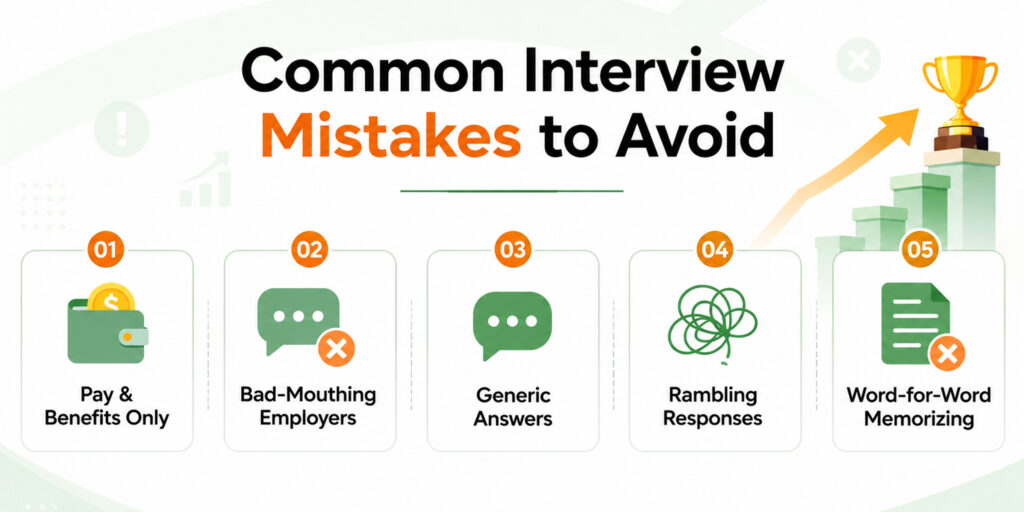
- Talking only about pay, benefits, or location. These matter, but they are not why the company should hire someone.
- Bad-mouthing a previous employer. It raises red flags about professionalism, even when the complaint is valid.
- Giving a generic answer that fits any company. If the same answer works for five different job postings, it needs work.
- Rambling without a clear point. Aim for 30 to 45 seconds, not a monologue.
- Memorizing word-for-word. It sounds robotic. Know the key points, not a script.
A well-known career mistake shows up often in business school case studies: candidates who over-rehearse end up sounding stiff, while those who understand the core idea adapt naturally to follow-up questions. The goal is understanding, not memorization.
This isn’t the only interview question that trips people up. Prepping an answer for “What’s your greatest weakness?” matters just as much — check out The Best Weaknesses to Say in an Interview for real sample answers that work.
What’s Different in 2026: AI Interviews and Video Screens
More companies now use AI-driven first-round interviews or recorded video screens before a live conversation. A few updates worth knowing:
- AI interview tools score clarity and specificity, so vague answers get filtered out faster than in a human conversation.
- Recorded video answers should still follow the 3-part formula, just with slightly more detail since there is no interviewer to read body language.
- Company career pages increasingly include values statements written for algorithms and humans alike. Quoting these directly (in different words) helps both AI screening tools and human reviewers see alignment.
Quick Answer Checklist
Before walking into the interview, check the answer against this list:
- Mentions something specific about the company (product, mission, recent news)
- Connects a real skill or experience to the role
- Ends with what gets contributed, not just what gets gained
- Takes 30 to 45 seconds to say out loud
- Sounds natural, not memorized
Helpful Resources
For deeper interview prep, What Color Is Your Parachute? by Richard Bolles remains one of the most recommended career guides for structuring answers around real strengths. For a lighter but motivating watch before interview day, The Pursuit of Happyness is a popular pick among career coaches for its portrayal of persistence during a tough job search.
Final Thoughts: Answer Like the Job Is Already a Two-Way Street
Most advice on this question treats it like a test to pass. Flip that around instead.
Walking in with three specific reasons for wanting the job, and one honest question about whether the company can actually deliver on those reasons, changes the entire tone of the interview. It stops feeling like an audition and starts feeling like two people checking whether a partnership makes sense.
That shift is not just a communication trick. It tends to produce better job decisions, because it forces real thought about fit before the offer, not after the first rough week on the job. The best answer to “why do you want to work here” is not the most polished one. It is the one that would still be true a year later.
Before the interview, it also helps to make sure the resume matches the story being told. A free, ATS-friendly resume template can make that job search process a lot smoother, and using an online resume builder makes updating skills and experience quick before every new application.
Frequently Asked Questions
Why do interviewers ask “why do you want to work here”?
They want to check research, motivation, and fit between the candidate’s goals and the role.
What is the best answer to “why do you want to work here”?
The best answer names something specific about the company, connects it to a real skill, and ends with what the candidate can contribute.
How long should the answer be?
Around 30 to 45 seconds. Long enough to show thought, short enough to stay focused.
Can the same answer work for every job application?
No. A generic answer is one of the fastest ways to sound unprepared. Each answer should include at least one detail specific to that company.
What should be avoided in this answer?
Avoid talking only about salary or benefits, criticizing a past employer, or repeating vague phrases like “great culture” without backing them up.
- Why Interviewers Keep Asking This
- The Real Cost Behind This Question
- The Real Reason Most Answers Fall Flat
- The Simple 3-Part Formula for “Why Do You Want to Work Here?”
- How to Research a Company Before the Interview (2026 Update)
- Only 10 Minutes to Prepare? Do This
- “Why Do You Want to Work Here?” Sample Answers & Examples
- Entry-Level Candidate
- Career Changer
- Restaurant or Hospitality Role
- CNA (Certified Nursing Assistant) Answer
- Corporate or Office Role
- How Big-Name Employers Judge This Answer
- Adjusting the Answer by Interview Stage
- How to Close the Answer Smoothly
- Common Interview Mistakes to Avoid
- What’s Different in 2026: AI Interviews and Video Screens
- Quick Answer Checklist
- Helpful Resources
- Final Thoughts: Answer Like the Job Is Already a Two-Way Street
- Frequently Asked Questions
- Why do interviewers ask “why do you want to work here”?
- What is the best answer to “why do you want to work here”?
- How long should the answer be?
- Can the same answer work for every job application?
- What should be avoided in this answer?