- What Interviewers Want to Know
- A Simple Formula for Your Answer
- 1. Explain What Interests You About the Company
- 2. Connect the Role to Your Experience
- 3. Explain What You Can Contribute
- Why Specific Answers Work Better
- How to Research the Company Before Your Interview
- Check the Company Website
- Read the Job Description
- Check Recent Company Updates
- Review the Company’s LinkedIn Page
- Only Have 10 Minutes to Prepare?
- “Why Do You Want to Work Here?” Sample Answers
- Entry-Level Candidate
- Career Changer
- Industry Veteran
- Hospitality or Customer Service Candidate
- How to Make Your Answer More Personal
- Connect Your Answer to What You Can Offer
- Adjust Your Answer for Different Interview Stages
- Phone Screen
- First Interview
- Final Interview
- Common Mistakes to Avoid
- Giving a Generic Answer
- Focusing Only on Salary
- Speaking Negatively About Your Current Employer
- Giving a Long Answer
- Memorizing Every Word
- How to End Your Answer
- Other Interview Questions to Prepare For
- Quick Checklist for Your Answer
- To Conclude!
- FAQs
- Is “Why Do You Want to Work Here?” the Same as “Why Do You Want This Job?”
- How Long Should Your Answer Be?
- What If You Are Mainly Applying for the Money?
- What Do Interviewers Look for in This Question?
- How Should I Research the Company?
- How Can I Align My Goals With the Company’s Goals?
- How Can I Show That I Fit the Company Culture?
- What Is the Best Structure for My Answer?
- What Should I Avoid Saying in My Response?
- Can I Use a Sample Answer for This Question?
- How Can I Tailor My Answer for Different Industries?
- How Can I Deliver My Answer With Confidence?
Blog Summary: A strong “why do you want to work here?” answer should explain what interests you about the company, why the role fits your experience, and what you can contribute. Research the company, study the job description, and prepare a natural 30–45 second response with specific details.
“Why do you want to work here?” is one of the most common interview questions.
Your answer should show that you understand the company and the role. It should also explain why the position fits your goals and experience.
A strong why do you want to work here answer should sound specific and natural. Avoid answers that could work for any company.
What Interviewers Want to Know
When an interviewer asks this question, they want to understand your reasons for applying.
They may want to know:
- What interests you about the company?
- Why does this role fit your experience?
- What do you know about the company?
- What can you bring to the team?
- Does the position match your career goals?
You do not need a long answer. You need a clear one.
Your answer should connect the company, the role, and your experience.
A Simple Formula for Your Answer
Use these three points to build your response.
1. Explain What Interests You About the Company
Mention something specific about the company. You could mention its product, service, mission, reputation, or recent work.
Avoid general statements like:
“I want to work here because it is a great company.”
Instead, explain what caught your attention.
2. Connect the Role to Your Experience
Show why the position makes sense for you. Mention a relevant skill, past experience, project, or career goal. For example, you could connect a customer service background to a client-facing position.
3. Explain What You Can Contribute
Finish by showing the value you can bring. Talk about a skill or experience that can help the team. This makes your answer about more than what you want from the job.
Why Specific Answers Work Better
Generic answers can make it seem like you would accept any job.
For example:
“I have always wanted to work for your company.”
This does not tell the interviewer much.
A stronger answer explains what attracted you to the company and why the role fits your background.
For example:
“I was interested in this position because your company is expanding its customer support team. I have several years of customer service experience, so the role matches both my skills and the type of work I want to continue doing.”
Your answer should feel connected to the job posting.
How to Research the Company Before Your Interview
You do not need to spend hours researching a company.
Company values can also matter when candidates decide where they want to work. LinkedIn’s 2025 research found that the importance of working for a company whose values match your own increased by 4.3% in the U.S. during the first quarter of 2025. This makes company values useful information to review before your interview
Focus on information that can help you build a specific answer.
Check the Company Website
Read the About and Careers pages. Look for the company’s main products, services, values, and goals.
Read the Job Description
Look at the main responsibilities and required skills. Find one or two points that match your experience.
Check Recent Company Updates
Look for recent announcements, product launches, expansions, or other company news. You can use one relevant detail in your answer.
Review the Company’s LinkedIn Page
Recent posts can show what the company is currently working on. Choose one detail that connects to the role.
Only Have 10 Minutes to Prepare?
You can still build a useful answer.
Start with these three things:
- Read the job description again.
- Check the company’s About page.
- Look at one recent company update.
Then write down:
- One reason you want to join the company
- One reason the role fits you
- One skill you can contribute
This gives you a simple structure to follow during the interview.
“Why Do You Want to Work Here?” Sample Answers
The best answer depends on your background.
Use these examples as a starting point. Change the details so they match your real experience.
Entry-Level Candidate
“I was interested in this role because the position offers hands-on experience and the chance to develop my skills. I recently completed my training, and I want to start my career in a company where I can learn from an experienced team. I also believe my communication and problem-solving skills would help me contribute from the start.”
Career Changer
“I’m interested in this role because it lets me use the skills I developed in my previous career in a new industry. I spent five years in retail management, where I handled teams, solved customer issues, and improved daily processes. Those skills match many of the responsibilities in this position, and I’m ready to apply them in a new setting.”
Industry Veteran
“I’ve spent the last eight years working in this industry, and I’m interested in this position because it gives me a chance to use that experience in a new environment. Your focus on [specific area] matches the work I have done throughout my career. I believe I can contribute from day one while continuing to take on new challenges.”
Hospitality or Customer Service Candidate
“I’m interested in this role because your focus on customer service matches the way I have approached my previous work. I enjoy helping customers, working with a team, and staying calm during busy periods. My experience in hospitality has helped me build those skills, and I would like to bring them to your team.”
How to Make Your Answer More Personal
A good answer should include details that relate to the specific job.
Before the interview, identify:
- One company detail that interests you
- One responsibility that matches your experience
- One skill you can bring to the role
Then combine those points into two or three sentences.
For example:
“Your focus on improving customer support stood out to me when I researched the company. I have several years of experience handling customer issues and improving service processes. This role would let me use those skills while contributing to a team focused on customer experience.”
Do not copy this answer word for word.
Use the structure and replace the details with your own.
Connect Your Answer to What You Can Offer
Your answer should explain why you want the job. It should also show what you can bring to it.
This is important when the interviewer asks follow-up questions about your experience.
You can also prepare for the related question, why you should be hired, so you can explain your value more clearly.
Read our guide on why you should be hired for another common interview question.
Adjust Your Answer for Different Interview Stages
Your answer can change slightly depending on where you are in the interview process.
Phone Screen
Keep your answer short.
Focus on your interest in the company and the role.
First Interview
Add one specific detail about the position.
Connect that detail to your experience.
Final Interview
Mention something you learned during the earlier interviews.
This can show that you listened and stayed engaged throughout the process.
Common Mistakes to Avoid
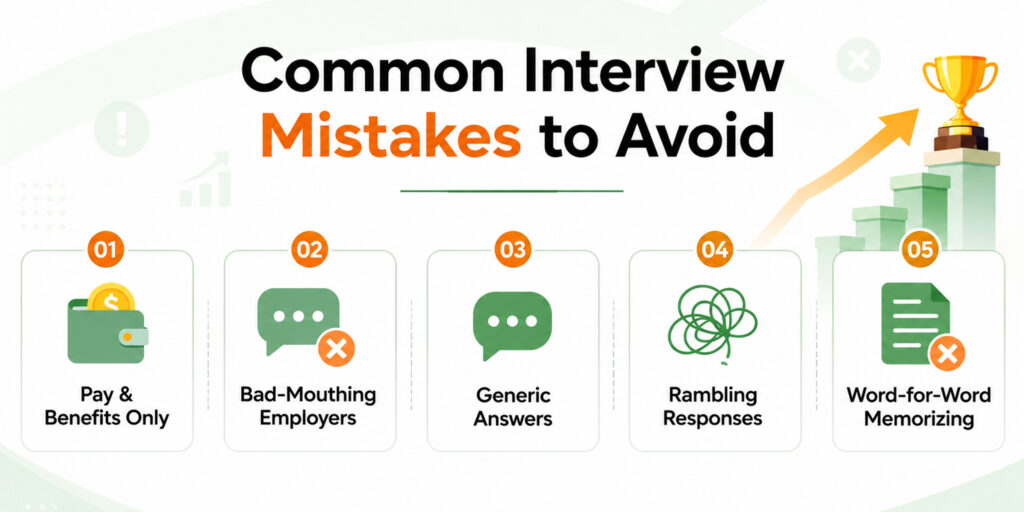
Giving a Generic Answer
Avoid answers that could apply to any company. Mention something specific about the employer or role.
Focusing Only on Salary
Pay and benefits are important when choosing a job. However, they should not be the main reason in your interview answer.
Speaking Negatively About Your Current Employer
Keep your answer focused on what attracts you to the new role. Do not use the question to complain about your previous or current workplace.
Giving a Long Answer
You do not need a long speech. Aim for about 30 to 45 seconds. Give the interviewer enough detail to understand your reasons without losing the main point.
Memorizing Every Word
Do not try to memorize a perfect script. Remember your main points instead. This will help your answer sound more natural.
How to End Your Answer
A strong answer should end clearly.
You can connect your final sentence to the role:
“That combination of the company’s work and the responsibilities of this position is what made me interested in applying.”
You can also end with a question if the conversation allows it:
“I’d also be interested to hear how the team approaches that goal in this role.”
Keep the ending natural.
Other Interview Questions to Prepare For
“Why do you want to work here?” is only one common interview question.
You should also prepare for questions about your strengths, weaknesses, experience, and qualifications.
For example, prepare an answer for best weaknesses to say in an interview.
Preparing for related questions can help you give clearer answers during the interview.
Quick Checklist for Your Answer
Before the interview, check your answer against this list:
- Does it mention something specific about the company?
- Does it explain why the role interests you?
- Does it connect the role to your experience?
- Does it show what you can contribute?
- Does it sound natural?
- Can you say it in about 30 to 45 seconds?
If you can answer yes to these questions, you have a strong structure to work with.
To Conclude!
A good answer to “Why do you want to work here?” should be specific and honest.
Start with something that interests you about the company. Then connect the role to your experience and explain what you can contribute.
Do not use a generic script. Research the company, study the job description, and prepare a few key points before the interview.
Your goal is simple: show why this company, why this role, and why you are a good match.
FAQs
Is “Why Do You Want to Work Here?” the Same as “Why Do You Want This Job?”
Mostly, yes. Both questions ask why the role and employer interest you. For “Why do you want this job?”, focus a little more on the role and daily work.
How Long Should Your Answer Be?
Aim for about 60 to 90 seconds. This gives you time to share a clear reason, connect your skills, and show company research.
What If You Are Mainly Applying for the Money?
Do not make money the main reason in your answer. Instead, find one honest reason you like the role or company and focus on that.
What Do Interviewers Look for in This Question?
Interviewers look at your motivation, company research, skills, and fit with the role. Your answer should also show that you understand the company and its goals.
How Should I Research the Company?
Start with the company website, especially the About Us and Careers pages. Check its values, products, services, recent updates, LinkedIn, and employee reviews.
How Can I Align My Goals With the Company’s Goals?
Review the company’s values and the job description. Then connect your career goals and relevant skills to what the company needs.
How Can I Show That I Fit the Company Culture?
Research the company’s values, communication style, and workplace environment. Use relevant examples from your experience to show how your approach fits those values.
What Is the Best Structure for My Answer?
Use a simple three-part structure. Explain why you like the company, connect your skills to the role, and show what you can contribute.
What Should I Avoid Saying in My Response?
Avoid generic praise, salary-focused answers, and negative comments about past employers. Use specific details about the company and explain the value you can bring.
Can I Use a Sample Answer for This Question?
Yes, but do not memorize it word for word. Use it as a guide and replace the details with your own skills, experience, career goals, and company research.
How Can I Tailor My Answer for Different Industries?
Match your examples to the industry and role. Highlight relevant skills and mention a specific detail about the employer to show genuine interest.
How Can I Deliver My Answer With Confidence?
Practice your answer out loud until it sounds natural. Focus on clear delivery, steady eye contact, and a conversational tone instead of memorizing every word.
- What Interviewers Want to Know
- A Simple Formula for Your Answer
- 1. Explain What Interests You About the Company
- 2. Connect the Role to Your Experience
- 3. Explain What You Can Contribute
- Why Specific Answers Work Better
- How to Research the Company Before Your Interview
- Check the Company Website
- Read the Job Description
- Check Recent Company Updates
- Review the Company’s LinkedIn Page
- Only Have 10 Minutes to Prepare?
- “Why Do You Want to Work Here?” Sample Answers
- Entry-Level Candidate
- Career Changer
- Industry Veteran
- Hospitality or Customer Service Candidate
- How to Make Your Answer More Personal
- Connect Your Answer to What You Can Offer
- Adjust Your Answer for Different Interview Stages
- Phone Screen
- First Interview
- Final Interview
- Common Mistakes to Avoid
- Giving a Generic Answer
- Focusing Only on Salary
- Speaking Negatively About Your Current Employer
- Giving a Long Answer
- Memorizing Every Word
- How to End Your Answer
- Other Interview Questions to Prepare For
- Quick Checklist for Your Answer
- To Conclude!
- FAQs
- Is “Why Do You Want to Work Here?” the Same as “Why Do You Want This Job?”
- How Long Should Your Answer Be?
- What If You Are Mainly Applying for the Money?
- What Do Interviewers Look for in This Question?
- How Should I Research the Company?
- How Can I Align My Goals With the Company’s Goals?
- How Can I Show That I Fit the Company Culture?
- What Is the Best Structure for My Answer?
- What Should I Avoid Saying in My Response?
- Can I Use a Sample Answer for This Question?
- How Can I Tailor My Answer for Different Industries?
- How Can I Deliver My Answer With Confidence?