- Why Language Skills Matter on a Resume
- When Should You Include Language Skills on Your Resume?
- Where to List Language Skills on a Resume
- Dedicated Languages Section
- Skills Section
- Professional Summary
- Certifications Section
- Language Proficiency Levels Explained
- CEFR vs. ILR vs. ACTFL Comparison
- Which framework should you use?
- How to Choose the Right Language Proficiency Level
- Language Proficiency Samples for Different Professions
- Customer Service Representative
- Registered Nurse
- Software Engineer
- Teacher
- Hotel Manager
- How to List Language Certifications
- Don’t do this on your final resume:
- Do this instead:
- Mistakes to Avoid When Listing Language Skills
- How ATS Reads Language Skills
- Final Thoughts
- Frequently Asked Questions
- How do you list language proficiency levels on a resume?
- Where should I put language skills on my resume?
- Should I include beginner language skills on my resume?
- What is the difference between fluent and professional working proficiency?
- Can employers verify language proficiency on a resume?
Speaking more than one language can strengthen your resume and help you stand out in competitive industries like healthcare, customer service, education, and hospitality. However, employers want to know how well you speak each language, not just which ones you know.
Using the right language proficiency level makes your resume more credible and easier for recruiters to evaluate. This guide explains where to list language skills, how to describe your proficiency, and includes practical examples. An AI resume builder with professionally designed resume templates can also help you showcase your language skills in a clear, polished, and ATS-compatible format.
Why Language Skills Matter on a Resume
Language skills are more than an additional qualification. They demonstrate strong communication, cultural awareness, and the ability to work effectively with diverse teams and customers. According to the American Council on the Teaching of Foreign Languages (ACTFL), multilingual proficiency supports effective communication and global engagement, making language skills valuable across many professions.
Including language proficiency on your resume can help you:
- Stand out from other qualified candidates.
- Qualify for multilingual or international roles.
- Showcase communication and cross-cultural skills.
- Support customer-facing and global business operations.
- Expand career opportunities across different industries.
Language skills are especially valuable in healthcare, customer service, education, sales, hospitality, marketing, aviation, translation, and technology. Even if a job posting doesn’t require another language, relevant language skills can strengthen your resume and highlight additional value to employers.
When Should You Include Language Skills on Your Resume?
It is a good practice to include language skills only if they strengthen your application or are relevant to the role. They can give you a competitive edge, especially for positions that require multilingual communication or international collaboration.
List your language skills if:
- The job requires bilingual or multilingual candidates.
- You’ll work with international clients or global teams.
- The role involves customer-facing responsibilities.
- You have professional, fluent, or native-level proficiency.
- Your language skills set you apart from other applicants.
If your proficiency is only at a beginner level and isn’t relevant to the position, it’s usually best to leave it off your resume. Always tailor your language section to match the job description and prioritize the languages most valuable to the employer.
Where to List Language Skills on a Resume
The best placement depends on how important your language abilities are to the role. Make sure the section is easy to find and uses clear proficiency levels.
Common places to include language skills include:
Dedicated Languages Section
This is the most common option, especially for candidates who speak multiple languages.
Example
Languages

English — Native

Spanish — Professional Working Proficiency

French — Conversational
Skills Section
If language proficiency is one of several key skills, include it alongside your technical and soft skills.
Professional Summary
Mention your language abilities in your summary when they’re a major qualification for the role.
For Example
Bilingual customer service professional with five years of experience supporting English and Spanish speaking clients.
Certifications Section
If you’ve earned recognized language certifications, list them in a separate certifications section to strengthen your credibility.
Organizing your language skills clearly helps recruiters and applicant tracking systems evaluate your qualifications more efficiently. Using professional resume templates helps you customize every section while keeping a clean, job ready format.
You can also use AI-powered keyword suggestions to better match the job description and present your language proficiency in a clear, professional format.
Language Proficiency Levels Explained
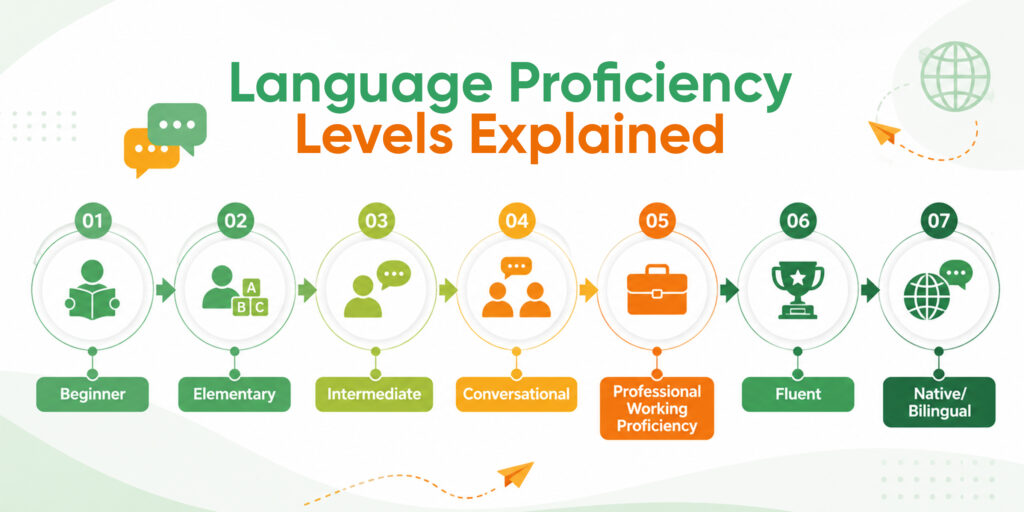
Choosing the right language proficiency level helps employers understand what you can do in real workplace situations. Instead of using vague terms like “good” or “basic,” use recognized proficiency levels that accurately reflect your speaking, reading, writing, and listening skills.
| Proficiency Level | What It Means | Resume Example |
| Beginner | You know basic words and simple phrases but need help with conversations. | German – Beginner |
| Elementary | You can understand and use common expressions for everyday situations. | Italian – Elementary |
| Intermediate | You can hold simple conversations and understand routine workplace communication. | Japanese – Intermediate |
| Conversational | You can communicate comfortably in most social and professional settings, though complex discussions may be challenging. | French – Conversational |
| Professional Working Proficiency | You can communicate confidently in meetings, emails, and daily business interactions. | Spanish – Professional Working Proficiency |
| Fluent | You speak, read, and write the language with ease in both personal and professional settings. | Mandarin – Fluent |
| Native or Bilingual | You have native-level proficiency or grew up speaking two languages. | English – Native, Arabic – Bilingual |
CEFR vs. ILR vs. ACTFL Comparison
Different employers and organizations use different language proficiency systems. Knowing these systems can help you choose the right language level for your resume, especially if you’re applying for international jobs or government positions.
| Framework | Common Levels | Best Used For |
| CEFR (Common European Framework of Reference) | A1, A2, B1, B2, C1, C2 | European employers, international companies, universities |
| ILR (Interagency Language Roundtable) | Level 0 to Level 5 | U.S. government and federal agencies |
| ACTFL (American Council on the Teaching of Foreign Languages) | Novice, Intermediate, Advanced, Superior, Distinguished | Education, academic institutions, language teaching |
Which framework should you use?
- CEFR is the most widely recognized standard for resumes and international job applications.
- ILR is commonly requested by U.S. government agencies and defense-related roles.
- ACTFL is mainly used in schools, universities, and language education careers.
If the job posting doesn’t require a specific framework, use clear proficiency levels like Professional Working Proficiency or Fluent. Recruiters can understand these terms more easily.
How to Choose the Right Language Proficiency Level
If you are unsure where your skills fall, you can easily self-assess. Ask yourself these practical questions to pinpoint your correct resume level:
- Can you introduce yourself and understand simple phrases? Choose Beginner or Elementary.
- Can you have everyday conversations and read basic documents? Choose Intermediate.
- Can you speak comfortably with coworkers and clients? Choose Conversational.
- Can you write emails, join meetings, and work in the language every day? Choose Professional Working Proficiency.
- Can you speak, read, and write with ease in most situations? Choose Fluent.
- Did you grow up speaking the language or use it every day? Choose Native or Bilingual.
Always match your language level to the job requirements. Customer service and sales roles may require Conversational or Professional Working Proficiency, while translator and interpreter roles often require Fluent or Native proficiency.
If you have language certifications, such as IELTS, TOEFL, DELF, DELE, JLPT, or HSK, include them on your resume. They verify your language skills and make your resume more credible.
Language Proficiency Samples for Different Professions
The way you present your language proficiency should reflect your profession and the job requirements. Here are sample resume entries for different careers.
Customer Service Representative
- English — Native
- Spanish — Professional Working Proficiency
Registered Nurse
- English — Fluent
- Mandarin — Conversational
Software Engineer
- English — Fluent
- German — Intermediate
Teacher
- English — Native
- French — Fluent
Hotel Manager
- English — Fluent
- Arabic — Professional Working Proficiency
- Italian — Conversational
Choose the format that best fits your resume and the position you’re applying for. If multilingual communication is a key requirement, create a dedicated Languages section so recruiters can quickly identify your proficiency.
How to List Language Certifications
A language certification can strengthen your resume by providing proof of your proficiency. While certifications aren’t required for every role, they can be valuable for positions involving international communication, education, translation, or government work.
Some widely recognized language certifications include:
- IELTS and TOEFL for English
- DELF and DALF for French
- DELE for Spanish
- JLPT for Japanese
- HSK for Chinese
- TOPIK for Korean
List certifications in a dedicated Certifications section or alongside the relevant language.
Don’t do this on your final resume:
Avoid using placeholder or template language.
For Example
- DELE B2 – Spanish
- JLPT N2 – Japanese
Why? The recruiter might think you just copied and pasted a generic template and forgot to edit it with your actual details!
Do this instead:
Use a clean, professional header that clearly states what the section is.
Certifications

DELE B2 – Spanish

JLPT N2 – Japanese
Mistakes to Avoid When Listing Language Skills
Even strong language skills can lose their impact if they’re presented incorrectly. Avoid these common mistakes:
- Using vague terms like Good or Basic instead of recognized proficiency levels.
- Overstating your language ability.
- Listing languages that aren’t relevant to the position.
- Mixing different proficiency frameworks on the same resume.
- Forgetting to include language certifications when they’re relevant.
Being accurate and consistent helps employers assess your qualifications with confidence.
How ATS Reads Language Skills
Many employers use Applicant Tracking Systems (ATS) to screen resumes before they reach a hiring manager. These systems scan for keywords that match the job description, including language requirements.
To improve your chances of passing an ATS:
- Use standard proficiency terms such as Professional Working Proficiency, Fluent, or Native.
- Match the language requirements listed in the job posting.
- Create a dedicated Languages section instead of mentioning language skills throughout your resume.
- Include relevant certifications when applicable.
- Keep formatting simple and consistent.
Language skills are just one part of an ATS-optimized resume. Factors like keyword placement, resume formatting, and section organization also influence how your application is parsed. Learn more about AI resume screening, ATS, and practical optimization strategies to improve your chances of getting noticed.
Using customizable resume templates makes it easy to organize your language skills in a clear, professional format. A well-structured resume is easier for both recruiters and applicant tracking systems to review.
Final Thoughts
Adding language proficiency to your resume can help you stand out and show employers your communication skills. Use clear proficiency levels, place them in the right section, and tailor them to the job you’re applying for. This makes your resume easier to read and helps employers quickly see your qualifications.
If you’re updating your resume, using an AI resume builder with ATS-friendly resume examples can help you showcase your language skills in a clear, professional format. This makes it easier to create a polished resume that highlights your qualifications and aligns with modern hiring standards.
Frequently Asked Questions
How do you list language proficiency levels on a resume?
List each language with a clear proficiency level, such as Beginner, Intermediate, Professional Working Proficiency, Fluent, or Native/Bilingual. The best place to add them is in a dedicated Languages section.
Where should I put language skills on my resume?
Add your language skills in a dedicated Languages section. If speaking another language is important for the job, you can also mention it in your professional summary or skills section.
Should I include beginner language skills on my resume?
Include beginner-level language skills only if they are relevant to the job or requested in the job posting. Otherwise, list only the languages you can use confidently at work.
What is the difference between fluent and professional working proficiency?
Professional Working Proficiency means you can use the language in meetings, emails, and daily work. Fluent means you can speak, read, and write the language comfortably in almost any situation.
Can employers verify language proficiency on a resume?
Yes. Employers may test your language skills during interviews or ask you to complete a written or spoken assessment. Always choose a proficiency level that accurately reflects your skills.
- Why Language Skills Matter on a Resume
- When Should You Include Language Skills on Your Resume?
- Where to List Language Skills on a Resume
- Dedicated Languages Section
- Skills Section
- Professional Summary
- Certifications Section
- Language Proficiency Levels Explained
- CEFR vs. ILR vs. ACTFL Comparison
- Which framework should you use?
- How to Choose the Right Language Proficiency Level
- Language Proficiency Samples for Different Professions
- Customer Service Representative
- Registered Nurse
- Software Engineer
- Teacher
- Hotel Manager
- How to List Language Certifications
- Don’t do this on your final resume:
- Do this instead:
- Mistakes to Avoid When Listing Language Skills
- How ATS Reads Language Skills
- Final Thoughts
- Frequently Asked Questions
- How do you list language proficiency levels on a resume?
- Where should I put language skills on my resume?
- Should I include beginner language skills on my resume?
- What is the difference between fluent and professional working proficiency?
- Can employers verify language proficiency on a resume?