- What Does Getting Referred Mean?
- Benefits of Getting Referred by an Employee
- Higher Chance of Getting an Interview
- Faster Hiring Process
- More Credibility with Recruiters
- Stronger Fit for the Company
- Better Chances of Receiving a Job Offer
- Does Getting Referred by an Employee Guarantee an Interview?
- How Does the Employee Referral Process Work?
- How Can You Get a Job Referral?
- Connect with People Who Know Your Work
- Explain Why You’re Interested in the Role
- Share an Updated Resume
- Respect Their Decision
- How to Mention a Referral in Your Cover Letter?
- Stand Out in Your Next Job Application
- Frequently Asked Questions
- When should I ask for a job referral?
- Can I ask someone I met on LinkedIn for a referral?
- Should I mention an employee referral on my resume?
- Can a friend refer me for a job?
So you’ve found an opening at a company you’ve been eyeing for a while. Your resume is ready. You’ve used an AI resume builder to create a polished application (great move by the way), and you’re all set to hit “Apply.”
But before you do, ask yourself one question. Is there someone at the company who could refer you?
An employee referral is an excellent yet underrated way to get your application noticed before it joins hundreds of others in the hiring queue.
Let’s understand how employee referrals work, the benefits they offer, and how to ask for one. We’ll also give you tips for mentioning a referral in your cover letter.
What Does Getting Referred Mean?
Getting referred by an employee means a current employee recommends you for a job opening at their company. Instead of applying on your own, someone who works at the company puts your application forward because they believe you’re a good fit for the role.
Employee referrals make up just 6% of job applications but account for 37% of all hires. This is why many companies encourage employee referral programs.
Benefits of Getting Referred by an Employee
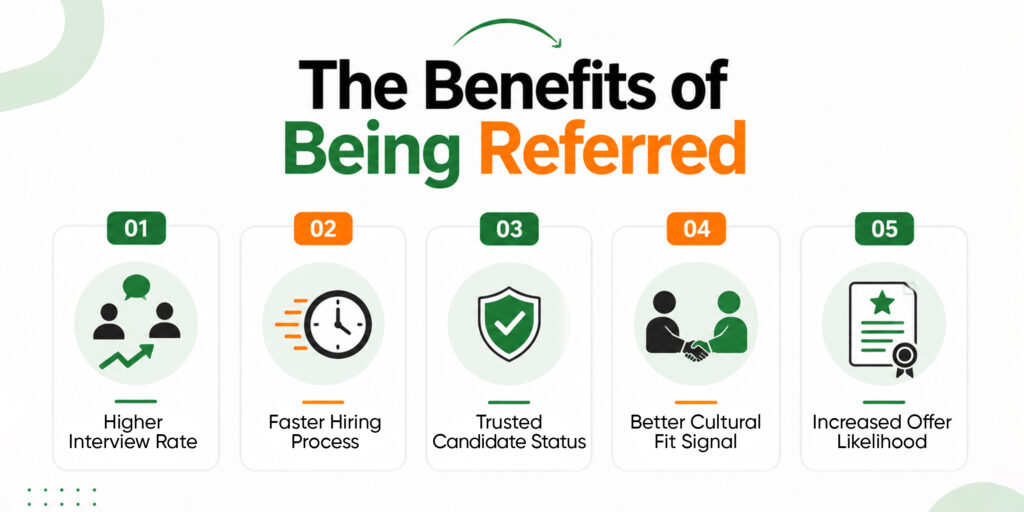
An employee referral does more than connect you with a recruiter. Here are some job referral benefits for job seekers:
Higher Chance of Getting an Interview
An employee referral can help your application stand out. Instead of joining hundreds of other applications, your resume comes with a recommendation from someone who already works at the company.
Faster Hiring Process
Did you know referred candidates are hired 4 times faster than others? Many companies review referred candidates sooner than other applicants.
More Credibility with Recruiters
A referral tells the hiring manager that an employee believes you’re a good fit for the role. Moreover, they assume you’ve been pre-vetted. This adds credibility to your application.
Stronger Fit for the Company
Employees usually refer people they believe will succeed in the role and work well with the team. That gives hiring managers another reason to take a closer look at the application.
Better Chances of Receiving a Job Offer
A referral can help you reach the interview stage. That said, you still need to prove you’re the right candidate. Think of a referral as an introduction. It may open the door, but you still need to earn the job.
Does Getting Referred by an Employee Guarantee an Interview?
A referral doesn’t guarantee an interview or a job. Hiring managers still evaluate your resume, skills, and experience before making a decision. However, referrals can give your application more visibility.
How Does the Employee Referral Process Work?
Every company has its own hiring process, but employee referrals usually follow a similar path. Here’s what happens from both your perspective and the employee’s.
| As the Candidate | As the Referring Employee |
|---|---|
| Find a job that matches your skills and interests. | Decide whether they know you well enough to recommend you. |
| Share your updated resume and the job posting. | Submit your referral through the company’s referral portal or directly to the recruiter. |
| Complete the application and any required forms. | Answer questions if the recruiter wants more context about your experience. |
| Wait for the recruiter or hiring manager to review your application. | Step back while the hiring team evaluates your application. |
| Attend interviews if you’re shortlisted. | They may receive updates, but they don’t make the hiring decision. |
How Can You Get a Job Referral?
Getting a job referral starts long before you ask for one. Most employees are happy to recommend someone they believe will represent them well. The key is to make it easy for them to say yes. Here’s how to get a job referral:
Connect with People Who Know Your Work
The best referrals come from people who can genuinely speak about your skills. This could be a former coworker, manager, classmate, mentor, or someone you’ve worked with on a project.
If you’ve only exchanged a few LinkedIn messages, don’t expect an immediate referral. Build the relationship first.
Explain Why You’re Interested in the Role
Don’t just ask, “Can you refer me?”
Tell them why you’re applying, what excites you about the role, and why you think you’re a good fit. This gives them something meaningful to share if a recruiter asks why they recommended you.
Share an Updated Resume
Make the process simple for the person referring you. Send your latest resume along with the job title or link to the posting. The less work they have to do, the more likely they are to help.
Explore resume examples and update yours accordingly. A clear, tailored resume also helps the employee feel more confident about recommending you.
Respect Their Decision
Not everyone can make a referral. Some companies have strict policies, while others expect employees to refer only people they know well.
If someone says no, thank them anyway. They did take some time to review your request. A respectful response leaves the door open for future opportunities.
How to Mention a Referral in Your Cover Letter?
If an employee has agreed to refer you, mention it in the opening paragraph of your cover letter. This gives the hiring manager context right away. Keep it brief, and focus on your qualifications rather than the referral itself.
Here’s an example of mentioning a referral in a cover letter:
| Dear Hiring Manager, I am excited to apply for the Marketing Coordinator position at ABC Company. My former colleague, Sarah Johnson, encouraged me to apply for this role. Sarah and I worked together for two years, and she believed my experience in digital marketing and content strategy would make me a strong fit for your team. |
After the opening, continue your cover letter as you normally would. There’s no need to mention in detail why the referral thinks you are a great fit for the role.
Stand Out in Your Next Job Application
Getting referred by an employee can help your application get noticed, but it’s only one part of the hiring process. Your resume and cover letter still play a major role in the hiring decision.
Updating your resume? Jump Resume Builder makes it easy to create a professional resume with AI-powered suggestions, customizable templates, and ATS-friendly formatting.
Frequently Asked Questions
When should I ask for a job referral?
Ask before you submit your application. This gives the employee time to review your resume and complete the company’s referral process before recruiters begin reviewing candidates.
Can I ask someone I met on LinkedIn for a referral?
Yes, but avoid asking immediately. Start by building a genuine connection through conversations or shared professional interests.
Should I mention an employee referral on my resume?
No. It’s usually better to mention an employee referral in your cover letter or, if appropriate, during your interview.
Can a friend refer me for a job?
Yes, but only if they know your skills and are comfortable recommending you. A referral is more credible when the employee can confidently explain why you’re a good fit for the role.
- What Does Getting Referred Mean?
- Benefits of Getting Referred by an Employee
- Higher Chance of Getting an Interview
- Faster Hiring Process
- More Credibility with Recruiters
- Stronger Fit for the Company
- Better Chances of Receiving a Job Offer
- Does Getting Referred by an Employee Guarantee an Interview?
- How Does the Employee Referral Process Work?
- How Can You Get a Job Referral?
- Connect with People Who Know Your Work
- Explain Why You’re Interested in the Role
- Share an Updated Resume
- Respect Their Decision
- How to Mention a Referral in Your Cover Letter?
- Stand Out in Your Next Job Application
- Frequently Asked Questions
- When should I ask for a job referral?
- Can I ask someone I met on LinkedIn for a referral?
- Should I mention an employee referral on my resume?
- Can a friend refer me for a job?